Add Row
Add Element
UPDATE
April 24.2025
3 Minutes Read

The Rise of Robotaxis: Volkswagen and Uber Pave the Way for Future Mobility

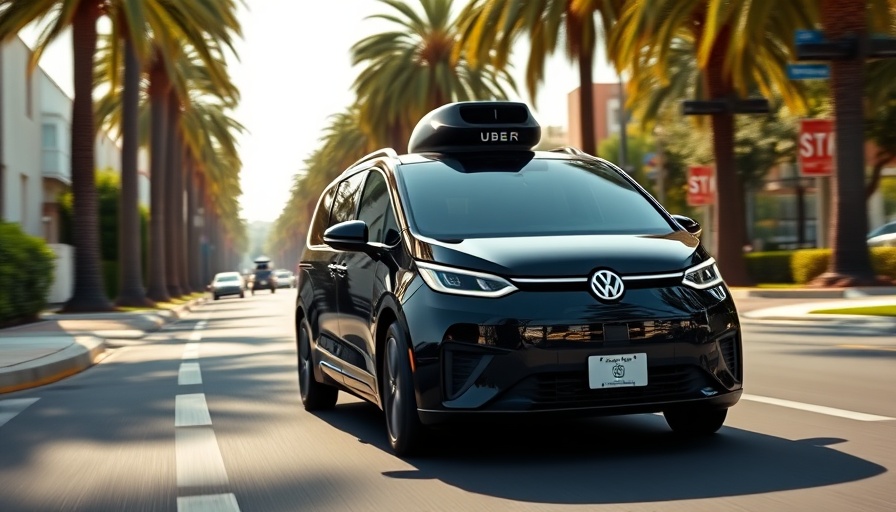
Volkswagen Uber robotaxis driving on a palm-lined street

Volkswagen and Uber Join Forces in the Robotaxi Revolution

In a transformative move towards autonomous mobility, Volkswagen has partnered with Uber to introduce a fleet of robotaxis based on the renowned ID. Buzz. Set to launch in Los Angeles by the end of 2026, this alliance promises to revolutionize transportation by combining electric vehicle technology with ride-hailing services.

The ID. Buzz AD: A Game-Changer in Autonomous Driving

The vehicles in this partnership will not be ordinary ID. Buzz models; they will feature a specialized version called the ID. Buzz AD, designed explicitly for autonomous operations. This adaptation is made possible by the collaboration of Volkswagen's subsidiary Moia and Israeli tech company Mobileye, boasting an impressive level 4 automation as classified by the SAE standard.

The introduction of autonomous vehicles has the potential to reshape urban mobility, providing efficient and eco-friendly solutions. As cities worldwide grapple with traffic congestion and environmental concerns, the ID. Buzz AD's all-electric nature represents a significant stride towards sustainable transport options.

Testing Grounds: A Look into Current Pilot Projects

Before its U.S. launch, extensive testing of the ID. Buzz AD is already underway in European cities like Hamburg, Munich, and Oslo, as well as Austin, Texas. This meticulous testing phase is crucial for fine-tuning the technology and ensuring a seamless transition to driverless operations. The reception of autonomous services in these regions will play a vital role in shaping public perception and regulatory approvals.

Competition in the Autonomous Space: Volkswagen vs. Waymo

Volkswagen's foray into autonomous driving places it in direct competition with established players like Waymo, Google's self-driving arm. As Volkswagen CEO Oliver Blume highlighted, the project is not just about advancing technology but also about creating a comprehensive mobility solution akin to what Waymo offers. The entry of more players into this market could signal a robust competition that drives innovation and consumer choice.

Shaping the Future of Urban Mobility

Both Volkswagen and Uber are keenly aware of the transformative impact of mobility solutions. Kjell Gruner from Volkswagen emphasized the company's vision of transforming transportation. This partnership with Uber aims to integrate the ID. Buzz into everyday commuting, addressing the increasing demand for sustainable and efficient transport options.

As the challenge of climate change becomes more pressing, the partnership underscores the importance of green technology in urban environments. Solar-powered solutions and other green energy initiatives can complement the autonomous driving developments, potentially leading to a holistic approach to sustainable urban living.

Consumer Readiness and the Road Ahead

As Tesla and others continue to develop autonomous features in their vehicles, the public's readiness to embrace these changes is essential. Uber's commitment to incorporating the ID. Buzz into their app signals a significant step in preparing consumers for robotaxi services. Initial deployments with safety drivers will provide a crucial learning phase, enabling users to adapt to this new form of transportation.

The collaboration also invites curiosity about how regulatory environments will adapt as these technologies become ubiquitous. Local governments will need to confront new public infrastructure challenges while ensuring safety and accessibility remain paramount.

Take Action: Embrace the Future of Sustainable Mobility

As this exciting development unfolds, it's imperative for consumers to stay informed and engaged with how these advancements will impact urban transportation. By understanding the role of autonomous technology and green initiatives in shaping our cities, we equip ourselves to advocate for policies that favor sustainable and innovative solutions.

In embracing these changes, whether as homeowners or innovators in the renewable energy sector, we stand at the forefront of a new era of mobility. Join the conversation about how we can collectively harness these advancements toward a greener future.

Industry News & Trends

Write A Comment

*
*
Related Posts All Posts
02.22.2026

The Solar Rebound Effect: Why Solar Users May Increase Their Power Consumption

Update Understanding the Solar Rebound Effect The concept of the solar rebound effect has critical implications for homeowners and businesses alike. It describes the tendency of solar energy users to increase their energy consumption after installing solar panels, undermining some of the perceived savings from using renewable energy. As more individuals embrace solar technology, it becomes paramount to understand how their energy habits might change once they transition to solar power, as highlighted in the video Using More Power After Getting Solar? That's The Solar Rebound Effect.In Using More Power After Getting Solar? That's The Solar Rebound Effect, the discussion dives into the phenomenon of increased energy use among solar panel users, prompting a deeper analysis of its implications and solutions. The Impacts on Energy Consumption Data indicates that when households switch to solar energy, they may feel encouraged to use more electricity due to perceived cost savings. This behavior can lead to increased appliance use, more electronics left on, or even the purchase of additional high-energy consuming devices. Consequently, the hoped-for reduction in energy bills may be less pronounced than expected. For solar providers, sharing insights about the rebound effect could enhance customer education and help clients make better-informed decisions about their energy consumption. Future Predictions: Navigating Energy Trends As solar adoption continues to rise, it is essential for energy providers to adapt to emerging patterns. Continued education on energy efficiency practices can mitigate the rebound effect's impact. Future trends will likely see the integration of smart home technologies that encourage effective energy management, ensuring consumers maximize their solar investments without excessively increasing their energy usage. Counterarguments: The Rebound Effect Debate While some argue that the solar rebound effect negates financial benefits, others suggest that its effects may be marginal relative to overall gains from reduced fossil fuel consumption and lower carbon footprints. Furthermore, governmental incentives and the potential for energy storage solutions can sway the equation in favor of solar users, encouraging a more sustainable lifestyle. Businesses within the solar installation sector could leverage this debate to inform potential customers about realistic expectations concerning energy costs and environmental impacts. The Relevance to Current Energy Policies In light of the solar rebound effect, energy policymakers must consider how regulations and incentives can address this phenomenon. For example, states offering financial benefits for energy efficiency upgrades can motivate solar adopters to engage with their energy usage more profoundly. As policies evolve, alignment with renewable energy goals becomes even more critical. Tools and Resources for Better Energy Management To combat the rebound effect, there are numerous tools available to homeowners. Energy monitoring systems and home automation setups can provide insight into energy habits and help manage consumption intelligently. These resources empower consumers to make informed decisions and optimize their energy usage in real-time, making them not just passive users of solar energy but active stewards of their energy consumption. Understanding the solar rebound effect provides essential insights for both consumers and energy providers, especially as solar adoption rates escalate across the nation. Through analyzing the implications and leveraging knowledge around energy consumption, everyone can contribute to creating a more sustainable energy future. As solar technology continues to advance, being informed about usage habits will prove vital for maximizing benefits.

02.22.2026

AI’s Biggest Mistake and Its Impact on Financial Decision-Making

Update AI: The Unrecognized Risks Doughnut Hole Artificial intelligence (AI) heralds remarkable opportunities for innovation and efficiency, yet lurking beneath its brilliance are significant missteps that pose real risks. The most glaring mistake often overlooked is the reliance on AI systems to make critical decisions without appropriate human oversight.In 'AI’s biggest mistake is THIS', the discussion dives into the ethical implications and risks of AI decision-making, prompting us to further analyze its layered complexities. Why It Matters: Understanding the Implications This reliance raises several ethical and operational questions. In fields like finance and healthcare, AI algorithms can create recommendations or decisions based on vast data sets. If these results are taken as gospel without the scrutiny of human intelligence, the results can be disastrous. Misjudgments and algorithmic biases can lead to financial repercussions or health consequences. In a world increasingly hinged on technology, it’s vital to implement a judicious balance where AI complements human decision-making rather than replaces it. Taking a Step Back: Historical Context of Human Oversight Humans have always managed risks tied to revolutionary technologies. From the introduction of the printing press to the invention of the internet, each advancement came with pitfalls that required human intervention and governance. Cars once lacked safety features, leading to serious accidents until regulations and technology caught up. Similarly, in the realm of AI, policy-makers must intervene to ensure these innovations are aligned with societal values and hold the appropriate safeguards. The Emotional Connection: Why We Must Care AI's trajectory impacts more than just industries; it deeply affects our daily lives. Consider the trust we place in technology: from managing our finances to navigating our health. If AI makes unilateral decisions affecting our lives or finances, it can breed skepticism and anxiety among the public. People want assurance that their best interests remain at the forefront, combining human intuition with high-tech efficiency. Future Predictions: The Role of Governance Looking forward, as AI continues to integrate into our homes and businesses, governance will play a pivotal role. Regulations must evolve hand-in-hand with the technology to ensure that we harness the power of AI while safeguarding human rights and ethical standards. Financial incentives can encourage businesses to adopt responsible AI practices, creating a more balanced ecosystem. Steps Toward Responsible AI Implementation To buttress the benefits of AI while mitigating risks, practical steps can be enacted. Firstly, education on AI processes should be prioritized. This equips individuals and businesses alike to understand how AI operates and how decisions can be scrutinized effectively. Secondly, promoting diverse teams in AI development can curb biases and enhance decision-making, ensuring technology is reflective of varied human perspectives. Finally, fostering a culture of accountability in technology use will help build trust between individuals and AI systems. In light of the profound influence AI will have on various sectors, the discussion surrounding its biggest mistake—insufficient human oversight and accountability—engages both financial practitioners and everyday consumers. Encouraging an AI narrative centered on human integrity ignites transformative conversations about our responsibilities as custodians of technology.

02.21.2026

Tesla’s Cybercab Pioneers Inductive Charging for a Wireless EV Future

Update Revolutionizing EV Charging: Tesla's Cybercab Journey Tesla is on the brink of revolutionizing the landscape of electric vehicle charging with its upcoming Cybercab. After recently clearing a significant regulatory hurdle by securing a waiver from the US Federal Communications Commission (FCC), Tesla is poised to introduce a game-changing inductive charging system that promises a wireless future for its autonomous vehicle. A Technical Leap: Understanding Inductive Charging The Cybercab represents more than just a mode of transport; it’s a symbol of innovation. Currently under development at Tesla's Austin plant in Texas, this vehicle will operate without the traditional components of a steering wheel and pedals, emphasizing its fully autonomous nature. The newly approved static inductive charging setup consists of a specially designed pad embedded in the ground, which works in conjunction with a receiver on the vehicle. This technology utilizes magnetic coils to facilitate wireless energy transfer as long as the car is properly aligned with the charging pad. If successful, it would position Tesla at the forefront of a more efficient and user-friendly EV charging method. Understanding Ultra-Wideband Technology in Everyday Use The FCC’s approval of Tesla’s ultra-wideband (UWB) technology marks a pivotal moment not just for the company, but for the entire electric vehicle sector. Unlike traditional charging methods, UWB allows for precise communication between the vehicle and charging station, which greatly enhances the charging efficiency. This technology shines in its ability to operate with less interference than previous communications systems, offering a smoother user experience. Preparing for a Sustainable Future Adopting inductive charging could significantly enhance the appeal of electric vehicles amongst homeowners and businesses interested in sustainable living. It removes the hassle of connectors and cables, allowing users to park their vehicles and walk away as charging occurs seamlessly. This advancement aligns with the growing trend towards greener energy solutions, supporting the vision of grid independence and sustainability. Broadening Charging Options: Conventional Charging Support While Tesla is keen on promoting its innovative charging system, the Cybercab will also be equipped to utilize conventional charging methods, ensuring versatility and practicality. Reports indicate that Cybercab prototypes have been frequently seen at standard Tesla Superchargers across the country, suggesting that this vehicle will retain traditional charging compatibility, catering to a wider market. The Path Ahead: Looking Beyond the Cybercab With Tesla's advances in charging technologies, one can speculate on future trends in electric vehicle infrastructure. The combination of both inductive and conventional charging methods may prompt other EV manufacturers to explore similar technologies. As public interest in electric vehicles remains on the rise, these developments could lead to broader adoption and increased investment in electric transportation. What Homeowners and Businesses Should Know For homeowners and businesses committed to adopting solar and green energy solutions, understanding these emerging technologies is key. The Cybercab and its inductive charging capabilities represent a future where charging becomes automatic and unobtrusive, much like how many now utilize solar panels on rooftops. This knowledge can influence decisions on transitioning to electric vehicle ownership, integrating energy-saving solutions, and participating in a cleaner environment. Engaging in the Future of Transportation As we stand on the frontier of technological advancements in transportation, it's crucial for interested parties to stay informed and engaged. The emergence of vehicles like the Cybercab not only represents significant advancements in automotive technology but also serves as an essential step toward sustainable living. Keeping abreast of these developments can inspire individuals to rethink energy consumption patterns and make informed decisions regarding the adoption of green technologies within their lives. As the electric vehicle landscape continues to evolve, staying informed about advancements like the Cybercab and its inductive charging capabilities is vital. By exploring solar and green energy solutions, homeowners and businesses alike can better position themselves for a sustainable future. Consider assessing your own energy solutions and planning for the integration of electric vehicle technologies to contribute to a more sustainable world.

Terms of Service

Privacy Policy

Core Modal Title

Sorry, no results found

You Might Find These Articles Interesting

T
Please Check Your Email
We Will Be Following Up Shortly
*
*
*